Category: Blog posts

Cloud seeding and weather modification

Imagine a world without rainfall. We call it droughts. Or imagine a situation of torrential rainfall and flooding, like in Pakistan last year.

And imagine a world where all our groundwater reserves have dried up. This is not too hypothetical a scenario — the world’s groundwater reserves are already declining. Groundwater is no different from fossil fuels – it is going to deplete one day if we continue to extract without allowing it to recharge.

A drought does not kill in hundreds – when it happens, it kills millions. China, India, Bangladesh, Africa, and even Russia and USA have faced such droughts in their history. And flooding has similar consequences – it causes extensive loss of lives and properties.

So what can we do to prepare ourselves for such adverse scenarios or natural calamities? How can we make sure that we have enough freshwater resources to meet the demand of an ever-increasing population which is already 7 billion?

Cloud seeding is one potential solution. Cloud seeding can be used both to suppress or enhance rainfall. If used appropriately, the application of cloud seeding technology has many possibilities — from enhancing rainfall, snow packs, and groundwater reserves — to suppressing hails, the great enemy of farmers, which can destroy large crop fields in minutes. Cloud seeding is relatively a mature technology used since the 1950s when scientists first discovered the seeding ability of dry ice and silver iodide. It was extensively applied in the late 20th century but it slowly lost momentum afterward for various reasons. Its exploration is again gaining attention as we face prolonged droughts, heatwaves, flooding, and fires worldwide.


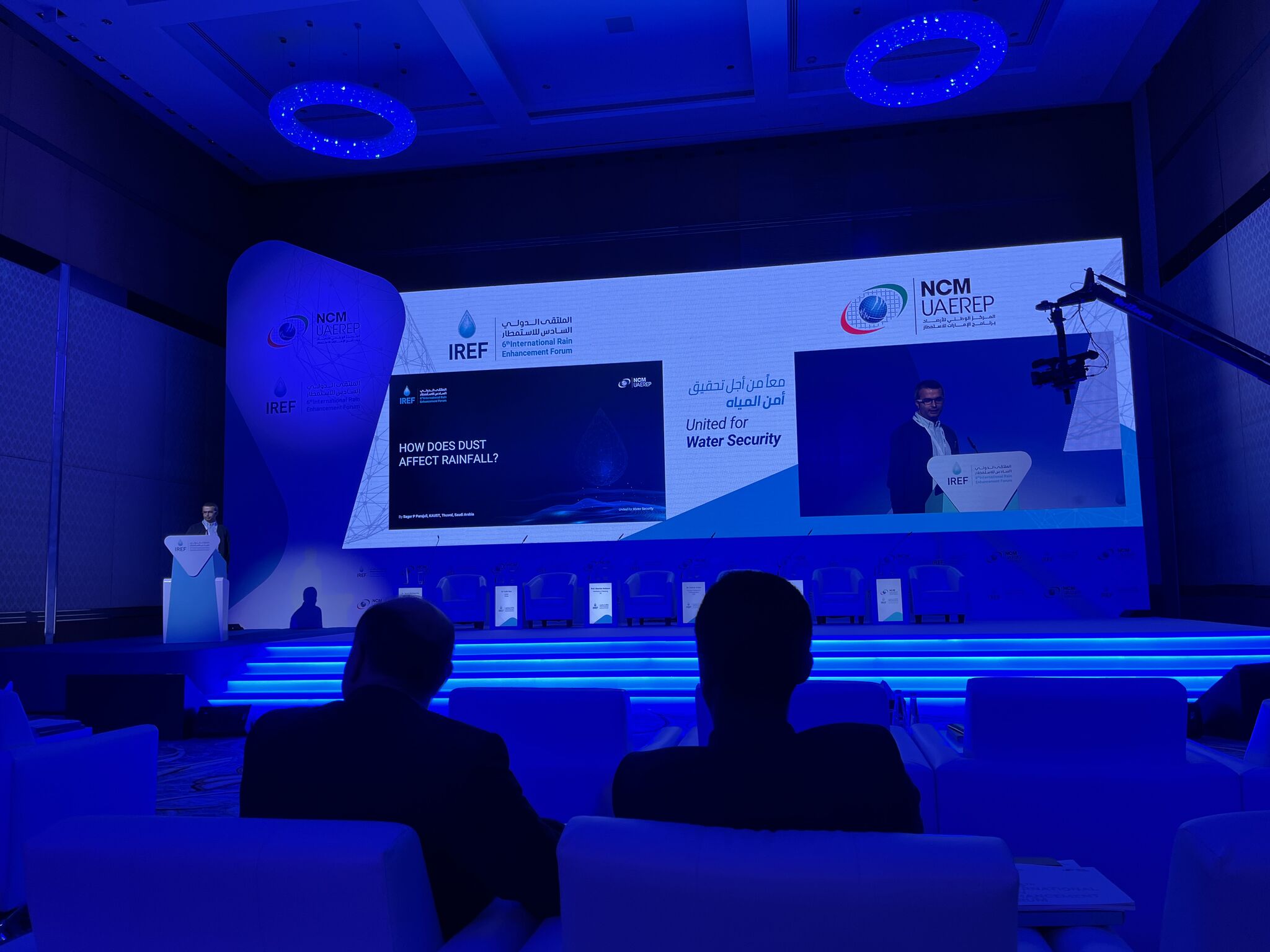
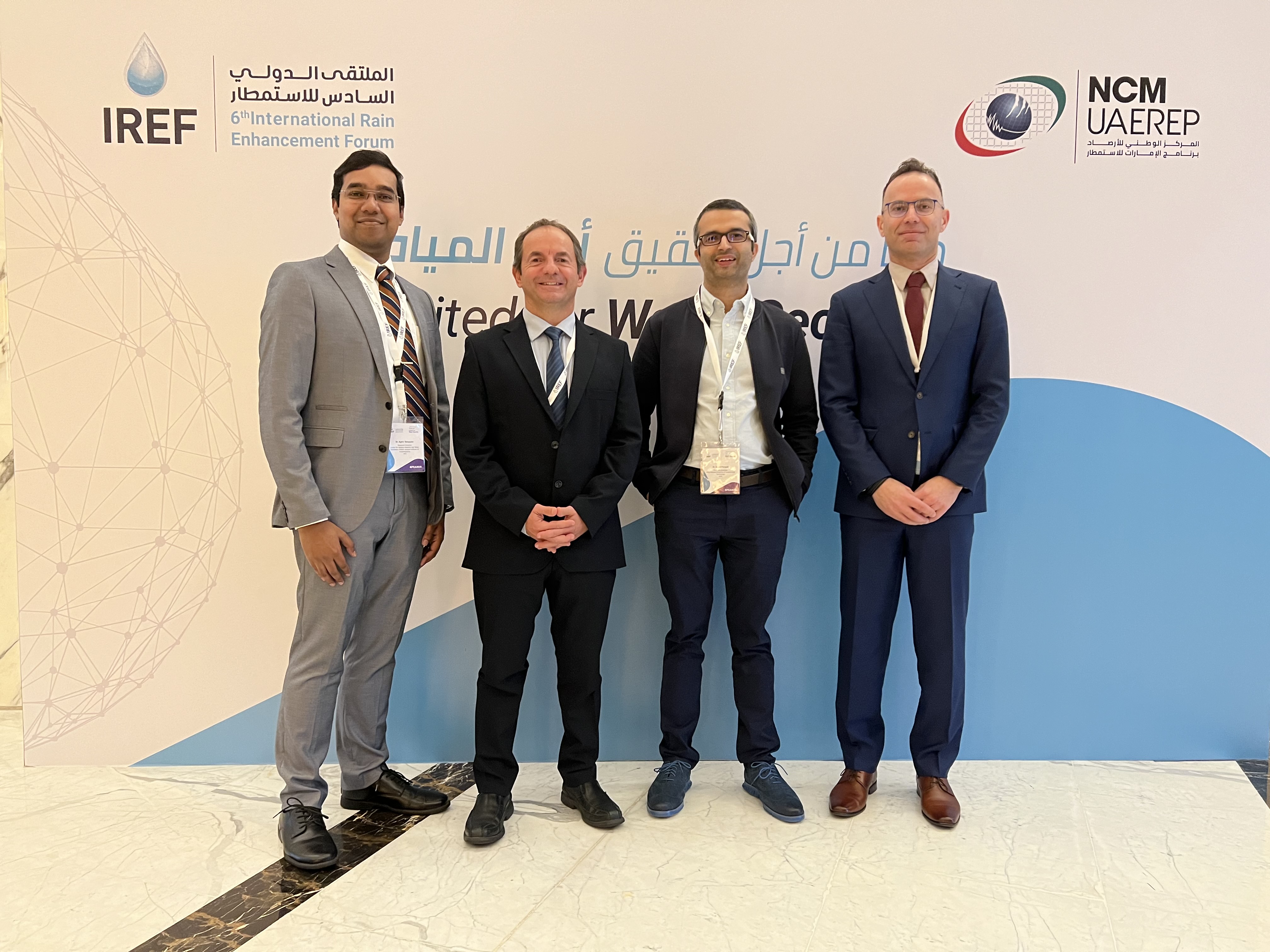
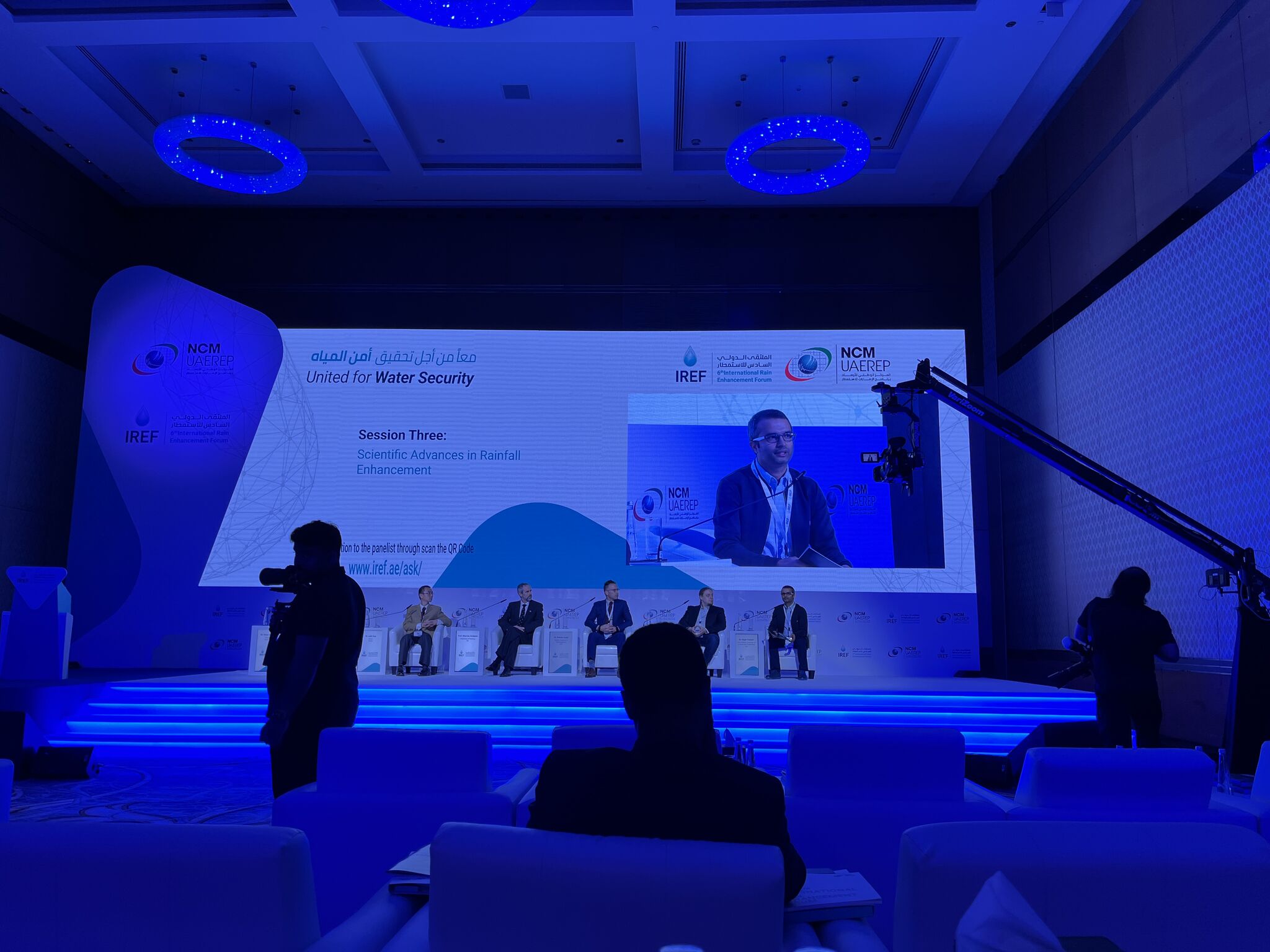
This week, scientists and policymakers from around the world working in the field of cloud seeding and rain enhancement are meeting in Abu Dhabi to discuss these and other related issues aiming to find water solutions for the future.


On the first day of #IREF organized by The UAE Research Program for Rain Enhancement Science (UAEREP), we saw several interesting new approaches in cloud seeding works, from the use of electrical charge to acoustic methods for rain enhancement. Today was another engaging day discussing the process-level understanding of aerosol-cloud interactions and the adoption of cloud seeding technology by countries such as Ethiopia and Thailand for tackling their water problems. For anyone interested in understanding rain enhancement technologies, below is the link to today’s program.

PhD: concluding remarks

When I was a kid, I never dreamed of earning a PhD. All I wanted was to study more and more. So I just followed the course of the river. I didn’t know or care whether the destination is ocean or something else.

When I became an adult, I knew that the society where I was brought up highly revered a PhD. So I had thought that I will also some day do a PhD.

We can plan something but not everything. That is what I have experienced. PhD thought came into my mind when my supervisor at Masdar Institute came to my desk one day. He showed a small ad in an AGU newsletter about a PhD position at UT Austin. I didn’t want to let down my supervisor so I applied. In fact, that was the only place where I applied. Until then, I had only thought of returning back to Nepal and rejoining my low-paid but highly revered ‘engineer’ position. I was not sure about it even after I got the offer. I really didn’t know that UT-Austin was a good ranking Tier 1 university until I posted about this offer in my Facebook page. The comments reflected that UT Austin is a great place. My perceptions got changed. I decided to pursue.

I was about to give up soon after I started my research at UT Austin. I was hit really hard in one of the group meeting. Not only by my supervisor but also by my colleagues. I felt the lowest of my life on that day. But soon I realized that it was because the standard and quality of research was much higher than I expected.

I was very busy taking 3 courses at that time and it was very hard to manage time for research. A few colleagues had already failed in their qualifying exams. So I many times felt that it was a wrong decision to pursue a PhD. My health was also not favoring me; I had been diagnosed with celiac disease (allergic to gluten). I very much regretted for leaving my government job of an Engineer back in Nepal.

10911231_10155054074510099_6469084610772877450_o

So there were only two options. Do or die. It is the same thing but a different tone is used in research: publish or perish. But as I interacted more and more with my colleagues and knew about research, I realized that we all were on the same boat. So I decided to continue. I worked harder. Time was not a problem for me because I was married single at that time. Weekends and holidays then meant more research. No wonder, my eye power kept on increasing at a rate of 0.25 per year.

Things started getting better. Qualifying exam was a great success.

I was still not comfortable in the world of research. I tried to avoid people who criticized my work. But later I realized that I can’t escape anywhere in research. You can’t escape your peers. You can’t escape your experts in your field. Most importantly you can’t escape the reviewers of you papers. It took little longer for me to realize that such interactions, feedback, comments, etc. are actually good things.

I never thought that I would be able to graduate in three and half years. But it happened. I worked hard and it got reflected. One of the reason for this success is also that I didn’t waste any of my work at UT Austin, not even the class projects. I always kept the main research topic in my mind before I started any class projects. So all of those activities later became part of my dissertation.

My daughter was born in the last year of my PhD. And the degree of ‘father’ means no less than PhD to me. Indeed, graduate study is when many people get engaged, married, or have their first kids.

13048166_10156764400375099_1719687007500413925_o
With my adviser(to my right), co-adviser(to my left), and examination committee members after the defense on April 15, 2016.

The most important thing that I realized during my PhD study is that learning is a never-ending process. Initially, I really thought that research is or has to be flawless. But I was totally wrong on that. There can be many flaws in your research. That is exactly why we discuss the limitation in the end of a research paper. PhD makes us understand this reality in depth.

I also realized that we can’t be successful in PhD just by gaining knowledge. We have to develop some conscience too. Knowledge without conscience is indeed dangerous.

When I was a child, I believed that if something is written in a text book, it must be true. I believed everything I read in a book. But now, I trust nothing other than my conscience. I now not only buy the conclusions of a research but the wholeness of it, with its limitations and assumptions. After all, a theory is only true until the assumptions are true.

In our research, we try to model the earth system. Modeling the earth system is indeed overwhelmingly complex. Even a grain of sand is very much complex to model, let alone the whole Earth. We must simplify many physical processes. We have to make many assumptions. So sometimes it can be frustrating too. But the beauty of research is that we understand little more everyday than yesterday. The beauty of research is in seeking, not in gaining something.

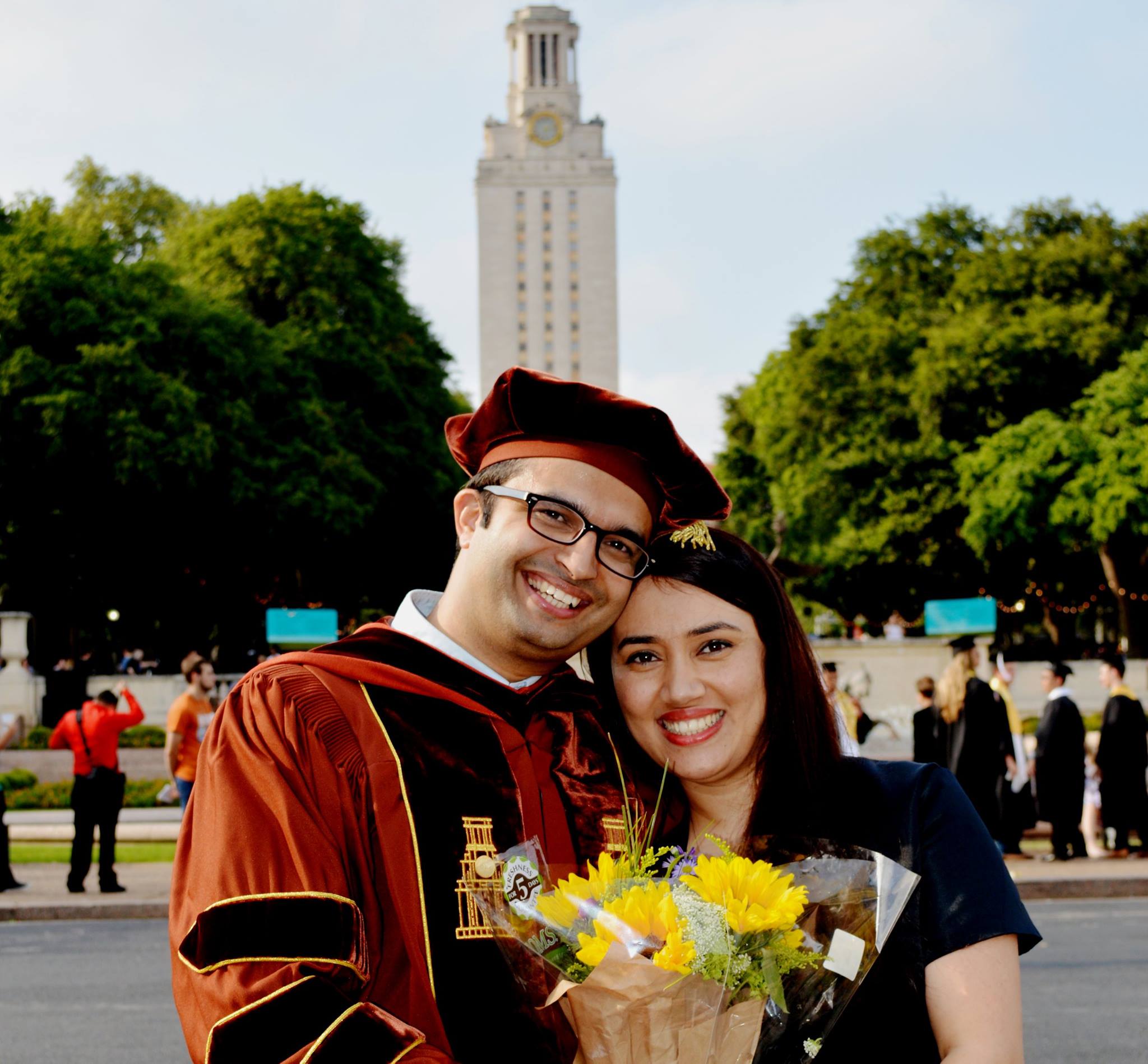
13288124_179159015813437_1353670647_oWith my wife Sirjana and daughter Nova on graduation day, May 21, 2016.

As I look at my Tam hanging on the wall, my heart leaps up with pride realizing that I received the highest degree possible in an academic world. But as I look out of the window and see the wonders of the nature, my heart bows down realizing that there is so much more to explore. I am still not sure how much knowledge I gained during my PhD but I know with certainty that I know very little.

Finally, what does this degree really mean? This degree reflects the knowledge of many people, knowledge that is passed down through generations. I am merely a carrier of this knowledge. It also reflects the aspirations of many people; my family, my teachers, my friends, and many anonymous others. It is an outcome of their good wishes.

Post originally posted on May 23, 2016. 
Satellite data: an overly underused resource

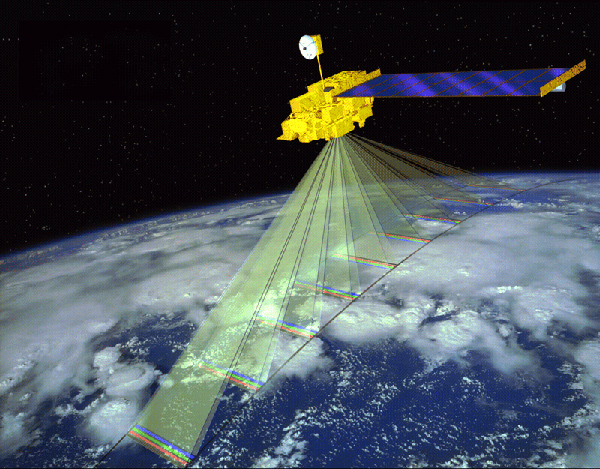
Satellite data have greatly contributed in improving our understanding of Earth’s climate. We have several climate models but, without satellite data, we don’t know how they are performing. Without the satellite data, we don’t know how far is our imagination from reality. Satellite data provide us the realistic boundary conditions. Without the boundaries, our theory may easily turn into a fiction.

satellitesai.jpg

Several satellites fly above us everyday. They are watching us. They are recording our behavior. They are indeed CCTV in large scale. They are recording human activities. We have done many things unconsciously in the past. We have emitted environmental pollutants. We have polluted ocean and water bodies. We have cut down trees. But now it is all documented. If you emit pollution or exploit natural resource, you may have to appear in the court one day.

A lot of data has been generated by various satellites. There is a lot of data. Tremendous amount of data. But, unfortunately, only a fraction of this data has been really used, for some useful purpose.

Take an example of surface reflectance data which are available from MODIS and other satellites. Reflectance basically measures how the surface properties change over time. In fact, Earth’s surface records a lot of things, much more things than what you think right now. When it rains, it gets recorded. When the surface gets dried, it is recorded. When it is very cold, it is recorded. When it is very hot, it is recorded. When a hurricane happens, it is of course recorded. When there is flooding, it is indeed recorded. When an asteroid falls, why would it not record it? Deforestation is surely recorded. Even information about day, night, and Earth’s rotation all are recorded. What is not recorded? Everything. Just everything. In a single reflectance data, you will find everything you need. You just need to change your perspective. You will see a lot of information hiding in the data set.

It is only because of our poor creativity that we are sending satellites one after another. Otherwise, we can extract myriad of useful information that we need just from a single data set. We just need some skill to decode that information. We just need a creatively advanced algorithm to extract the required signal from the data. We will benefit more from our satellite data if we spend more time developing algorithms that can extract the various useful signals in a data set.

The possibilities of using satellite data are endless. We just need to be creative. Do not search in Google Scholar for what others have already done with the data. If you do so, you will only reproduce what others have already done. Ask yourself. How can you use the data to manifest your inner passion? Think differently. Creativity will emerge, from within you.

Who said that vegetation data can’t be used to study the fires? We just need to understand the connection. Creativity is within us. To be creative, we have to believe in our own capacity first. The only difference between we and Einstein is that Einstein believed in himself but we didn’t. The exact same intelligence resides within each of us. It is only a question of how much we allow it to come out. To the one who believes in himself/herself, possibilities are endless.

Why air quality matters?

The air we breathe today is no longer the same when we were child. The rapidly increasing industrialization and urbanization has made it increasingly difficult to find fresh air in the cities we live. Even the remote villages are affected because the pollutants are transported downwind within a matter of hours when the meteorology is favorable.

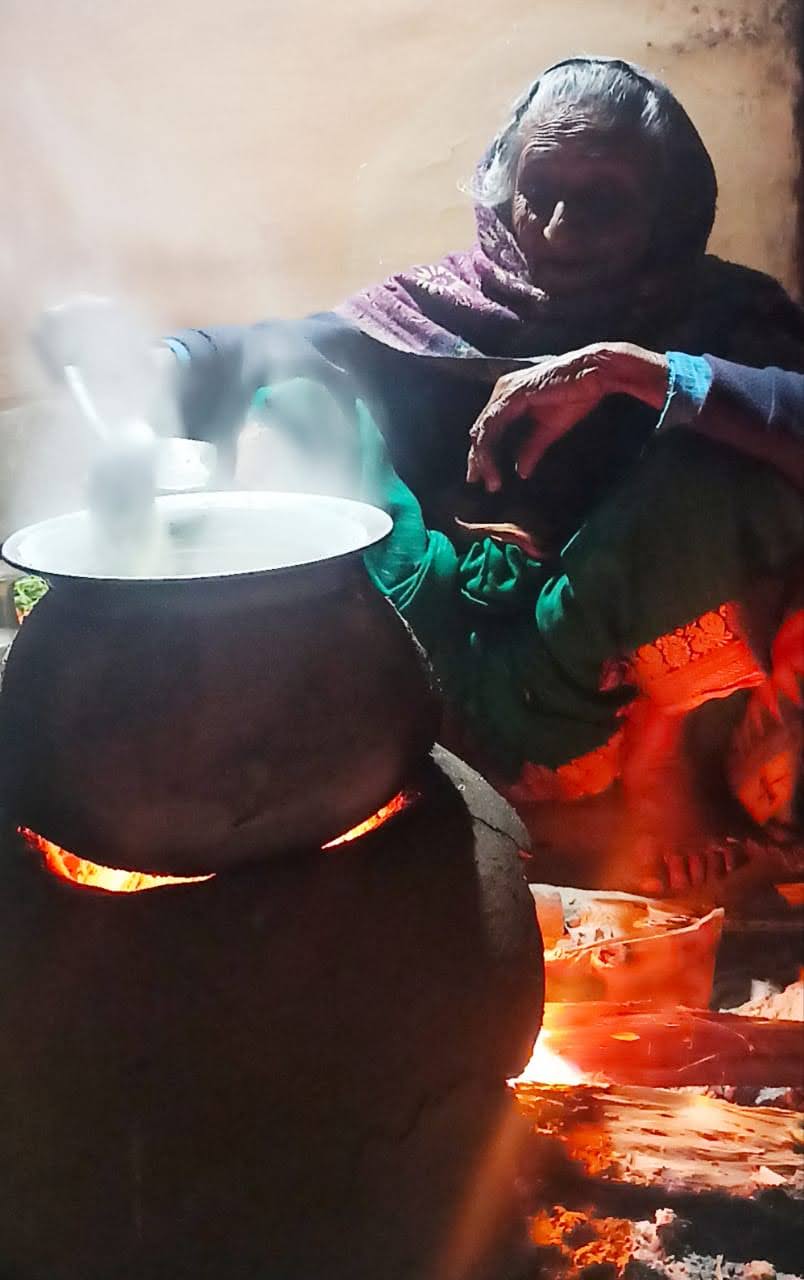
Air pollution is one of the main thing to worry about at the moment globally. Air pollution is what is really killing people. Millions of people are dying every year from respiratory diseases related to air pollution. A research paper published in 2020 in Cardiovascular Research journal estimates about 8.8 million people die prematurely every year around the globe due to outdoor and indoor air pollution. Even in the current context of COVID-19 pandemic, It is a well known fact that more people are dying by COVID-19 because of preexisting conditions related to lung health.

Air quality is a common agenda of all lives including us the human beings. Who would not agree on a policy to reduce air pollution? Who would disagree if we say that we need to curb pollutant emissions to improve the quality of air that we and our children will breathe? We all are affected by air pollution without exceptions. It is our common problem that we must solve together. And fortunately, if we take care of air pollution, we will also solve most of the problems related to global warming and climate change.

So why not focus our attention in solving the problems of air quality? It is indeed the most sensible thing to do. Isn’t it so?

Thank you!

Page 2 of 2

Powered by WordPress & Theme by Anders Norén

Secret Link